

Testing the Top 5 Disposable Film Cameras: Which Is Best?
This post may contain affiliate links so we may receive compensation if you sign up for or purchase products linked to below. As an Amazon Associate, I can earn from qualifying purchases.

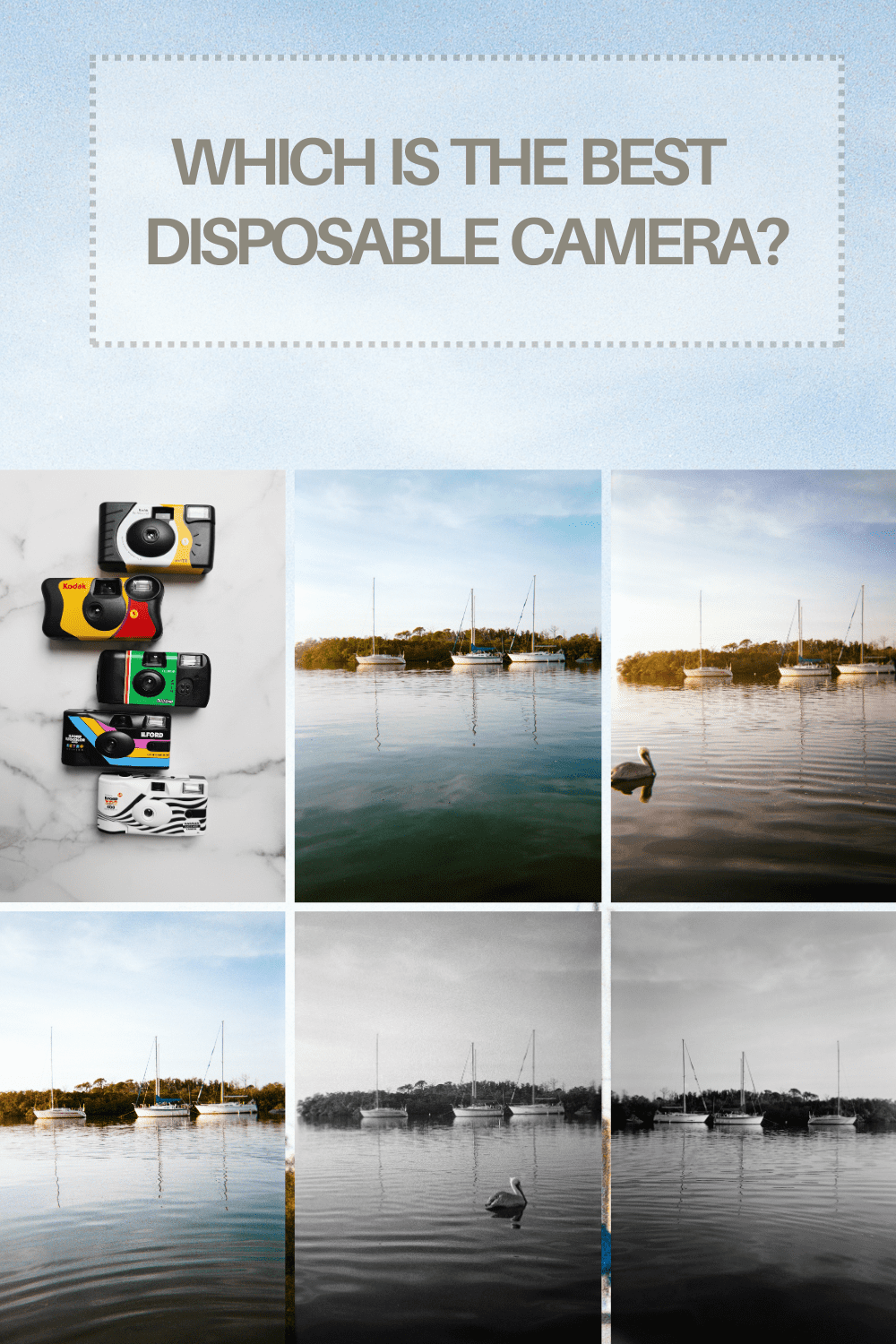
Disposable Camera Showdown: We tested top disposable film cameras to see which is best!
Kodak Funsaver vs Fujifilm Quicksnap vs Ilford Ilfocolor vs Kodak Tri-X vs Ilford XP2
Disposable cameras have made a huge comeback, and honestly, it’s easy to see why. In a world where we instantly review, edit, and delete photos on our phones, there’s something refreshing about shooting a roll of film blindly and waiting to see what comes back. Disposable cameras bring unpredictability, nostalgia, and a certain raw charm that digital just can’t replicate.
In this review, I’m comparing five popular single use cameras: the Kodak Funsaver, Fujifilm Quicksnap, Ilford Ilfocolor, Kodak Tri-X, and Ilford XP2 one-time-use cameras. We’ll look at price, film look, grain, exposure behavior, technical specs, tips for getting the best pictures, common mistakes, and where to develop them.
To make this review, I bought five different brands of single-use cameras and took 27 of the same photo on each one. So I could (as accurately as possible) see the similarities and differences between all of them. I tried to take a variety of photos, including a selfie, images with and without flash, sunflare, golden light, sky, and water so you could see image quality. Then I had them developed and scanned, with only dust removal.
A bit about me and why I wrote this post: my name is Alison Winterroth, and I have been a professional photographer since 2012. I purchase each item I review and test it out myself to give my honest thoughts. I love trialing unique, well-made products and sharing them with people who value tested product reviews from someone who isn’t just looking to make a sale. However, suppose you read this independently reviewed product and decide to purchase a camera or other product using the affiliate links in the blog post. In that case, I may earn a commission (with no additional cost to you), which enables me to continue creating content like this: honest, straightforward opinions and product demonstrations.
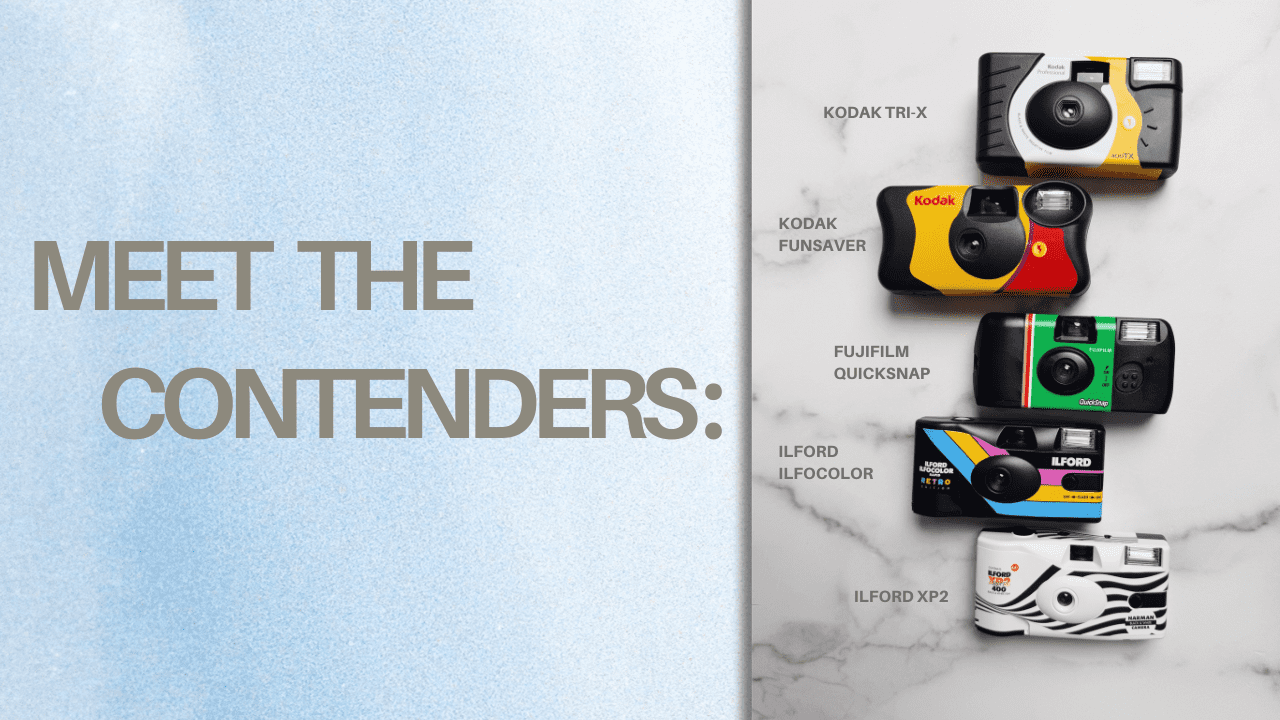
The Contenders
Each of these disposable cameras has a shutter speed of 1/100 to 1/125, a built-in flash, and you must wind the film to take each photo. They each have a pre-loaded battery for the flash button and are best in focus from 1 meter (three feet) to infinity. That means that the cameras will not be in focus at less than three feet. They all have about a 30mm focal length, plastic optics (lens), and the aperture is around f10- f11 for each. It really comes down to color, grain, and price when choosing your favorite disposable camera.
Kodak Funsaver
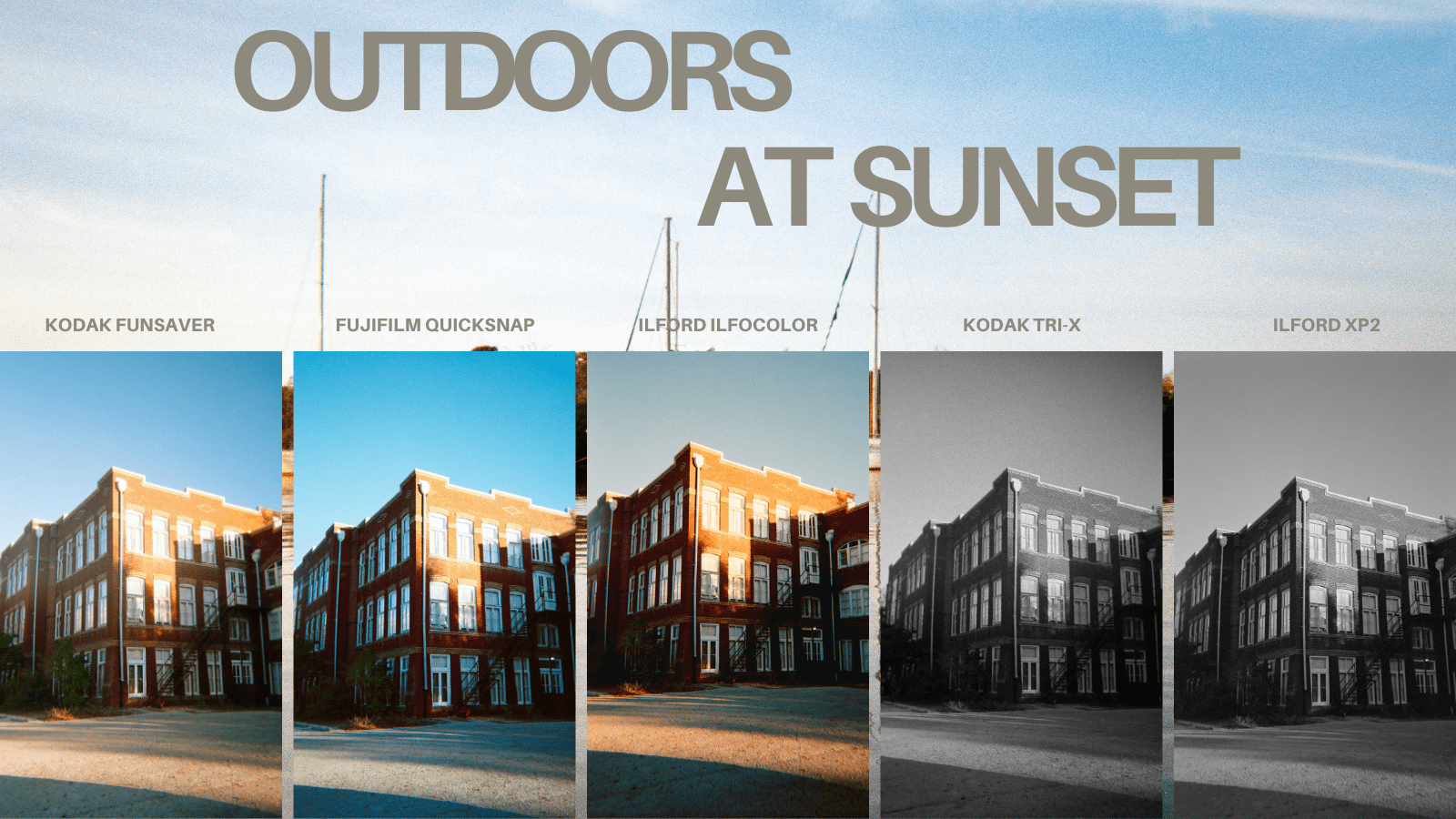
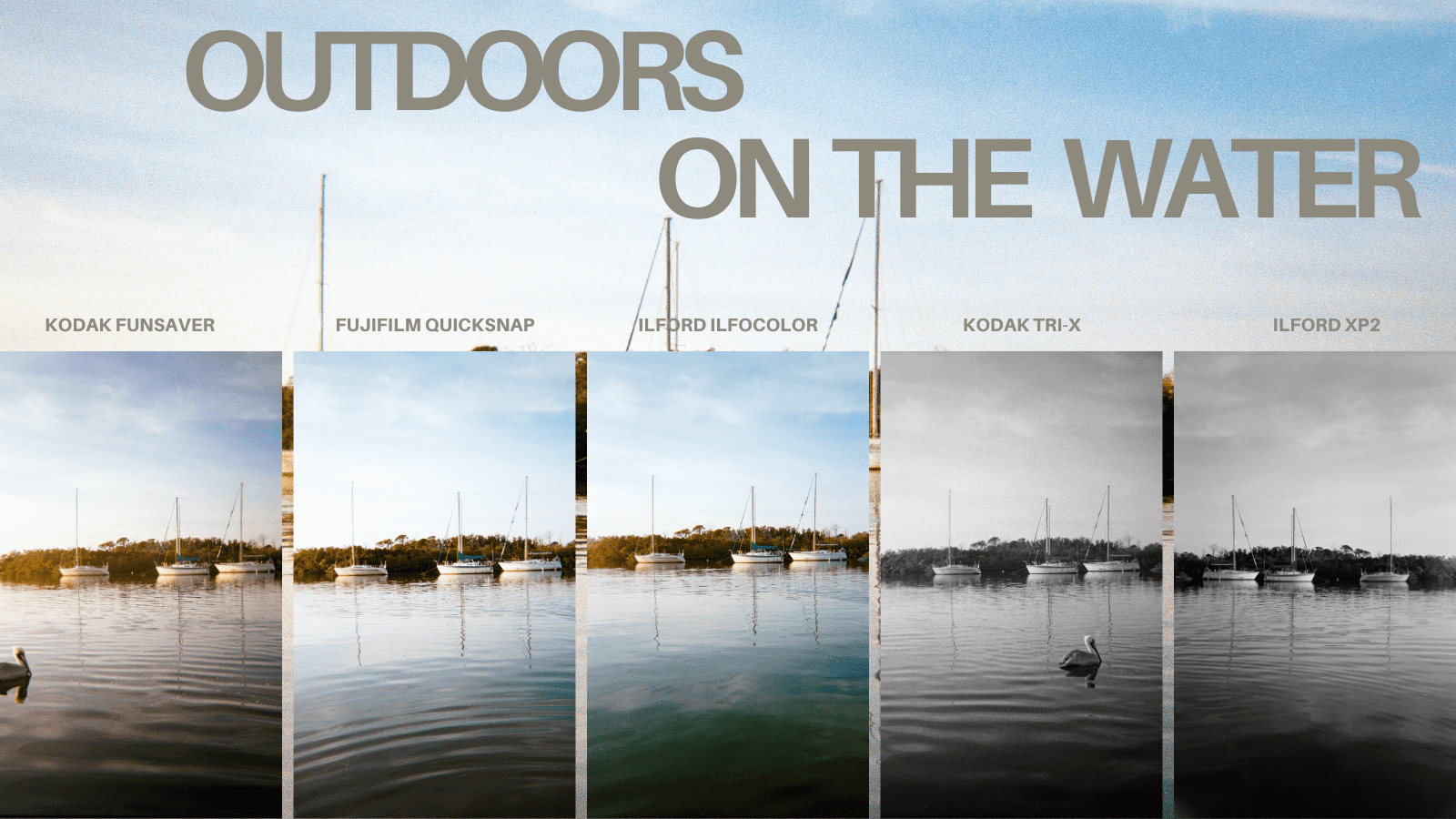
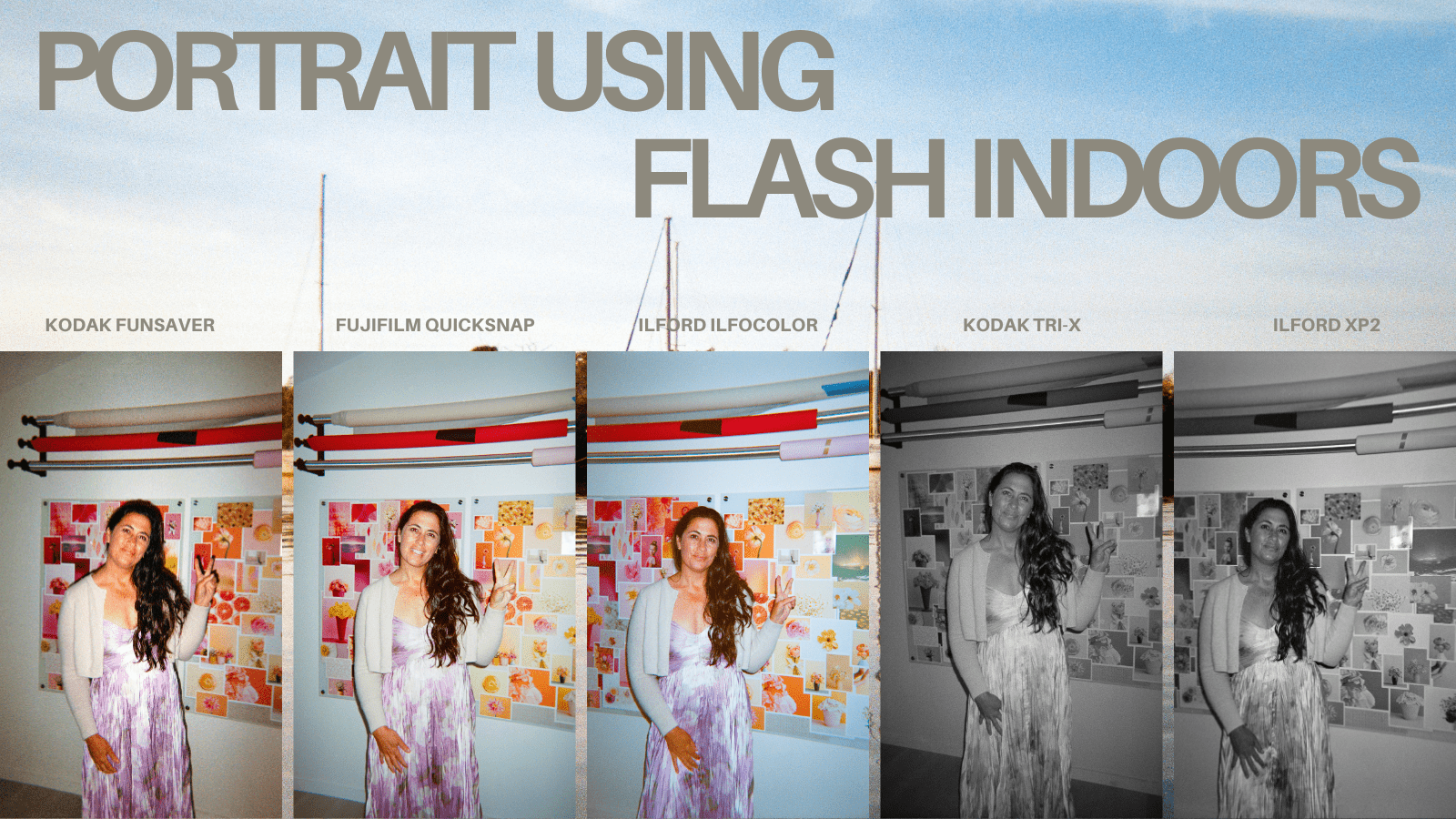
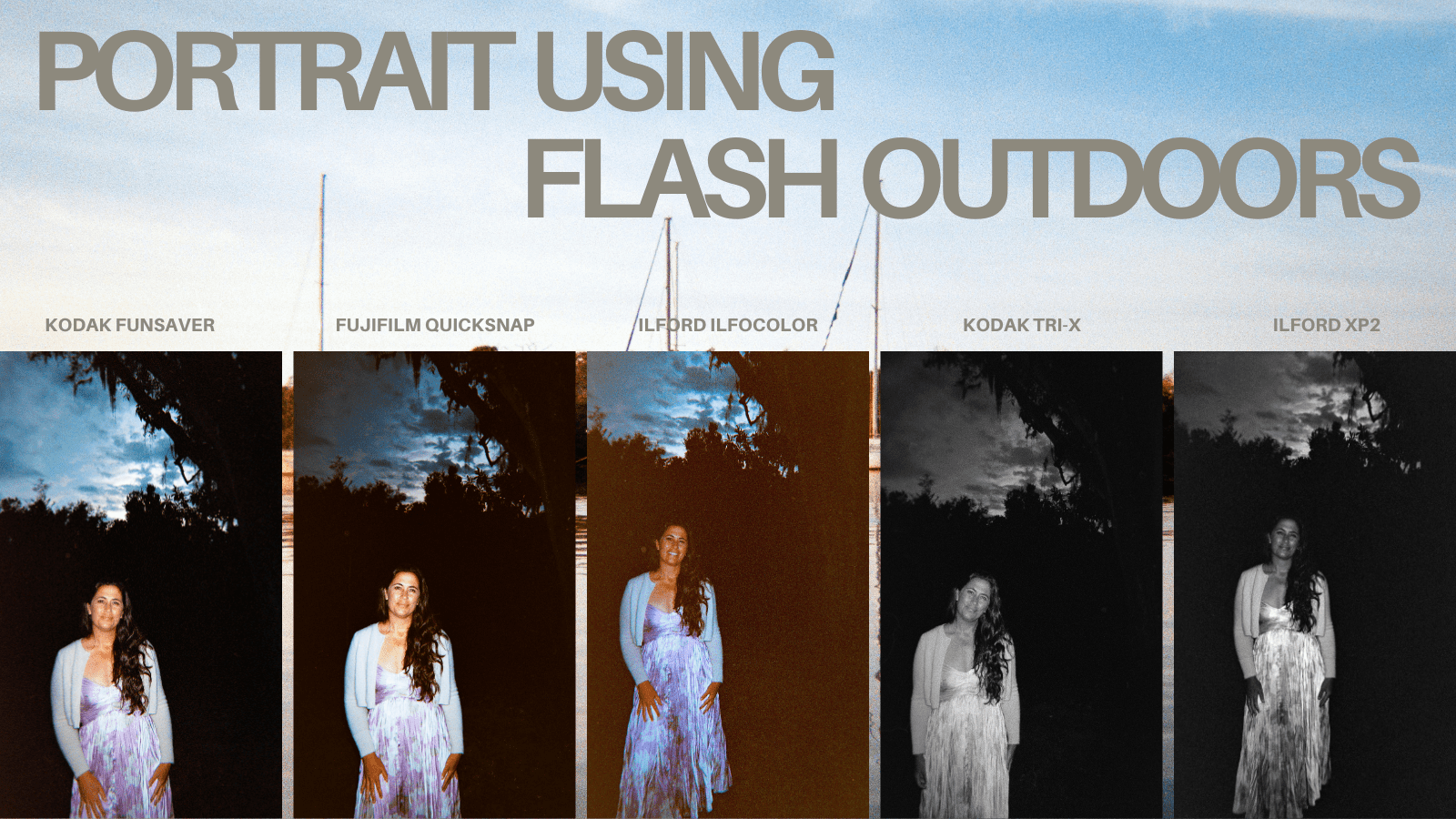
This one-time-use camera is a personal favorite of mine and one I reach for when I want to use a zero-thought camera, or when I give it to my children. It uses Kodak Gold 800 ISO color negative film stock, so it works better in low light than most of the other disposable film cameras, and that, paired with the golden tones it gives when taking photos, makes it a winner in my book.
Fujifilm Quicksnap
Another one of my standard go-tos is the Fuji Quicksnap with Fujicolor Superia 400 ISO speed 35mm color negative film. One of the things the Fujifilm camera is known for is its green tones. Colors often feel brighter and more saturated, with reds and greens really popping. In strong daylight, images can look crisp and vivid. However, in mixed indoor lighting, it sometimes skews slightly green or cool.
Ilford Ilfocolor
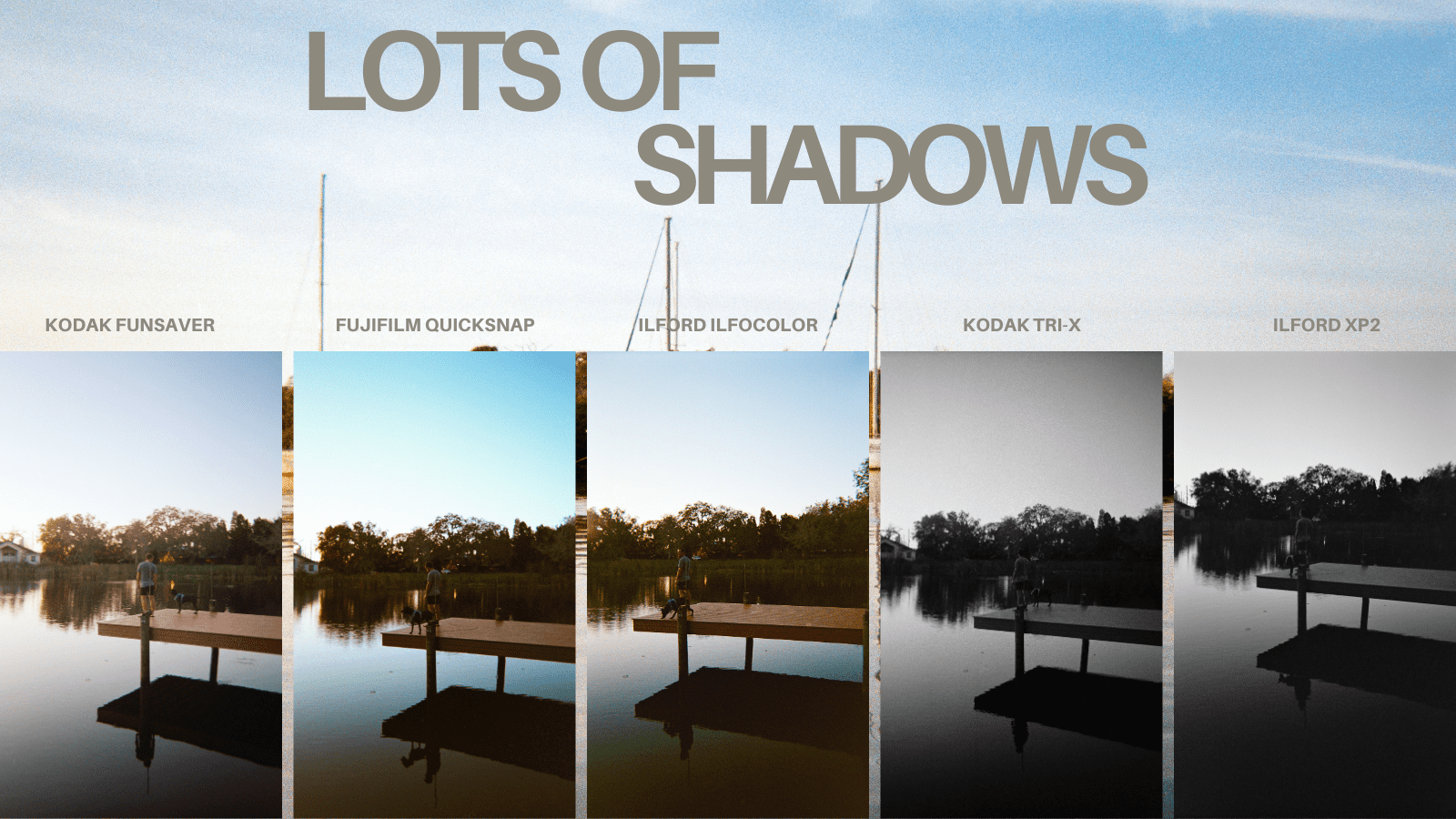
The Ilford disposables are loaded with Ilfocolor ISO 400 film. I found this film to be super red in the shadows, and in darker images, it was not my favorite.
Kodak Tri-X
Kodak Tri-X is iconic in the black-and-white film world, and its disposable version carries that heritage. Expect noticeable grain, strong contrast, and dark blacks. Highlights can glow, shadows can get deep and dramatic, and the grain is absolutely part of the aesthetic. This is not a clean, modern B&W; it’s gritty, expressive, and timeless. It works beautifully in bright sunlight or high-contrast environments. I love a strong black-and-white, and this film fits the bill for me. It was a great way to try out black and white film!
Ilford XP2
The Ilford XP2, on the other hand, offers a smoother black-and-white look. It’s a chromogenic film, meaning it’s processed in standard C-41 color chemistry, making it easier for many labs to handle. The grain is finer than Tri-X, and the tonal transitions feel softer. Shadows retain more detail, and highlights are less harsh. If Tri-X feels dramatic and bold, XP2 feels refined and flexible. I really love the Ilford black and white disposables.
Price: The Camera Is Cheap… The Development Is Not So Much
At first glance, disposable cameras seem inexpensive. Most color options (Kodak Funsaver, Fujifilm Quicksnap, and Ilford Ilfocolor) typically fall in the $10-$25 range, depending on where you buy them. The black-and-white options, especially Kodak Tri-X and Ilford XP2, often land a little higher, usually between $20 and $30.
But the real cost comes after you finish the roll. Developing and scanning can easily cost another $15–$25 (sometimes more), especially if you choose a professional lab. So while the camera itself feels affordable, the total cost is usually $25–$40 per roll once everything is processed. That’s important to consider when deciding whether you’re shooting casually or for something more intentional.
For me personally, the colors and tones you get from film are unmatched and oh-so-worth it. I am intentional in using film, though, and regularly alternate between film cameras and my digital camera. I just want to be clear that film is more expensive than almost any other kind of photography.
ISO, Grain & Exposure Characteristics
All five of these disposable cameras are rated around ISO 400 (except the Funsaver, which is 800 ISO), which is a versatile speed. ISO 400 works well in daylight, bright shade, and moderately lit indoor spaces, especially when using flash. However, disposable cameras typically have fixed apertures and shutter speeds (often around 1/100th of a second), meaning you don’t have much flexibility- meaning you need good light.
Because of that:
-
In bright sunlight: You’ll get the best sharpness and color.
-
In shade: Results are softer but still usable.
-
Indoors without flash: Photos will likely be underexposed and unusable.
-
Indoors with flash: Expect flat lighting but usable exposure.
Grain levels vary by film. Color disposables show moderate grain, which increases in low light. Tri-X shows pronounced, textured grain. XP2 remains comparatively fine-grained.
Technical Aspects: What You’re Working With
Disposable cameras are intentionally simple. They typically feature:
-
Fixed-focus plastic lenses
-
Fixed aperture
-
Fixed shutter speed
-
Built-in flash
-
27 exposures (sometimes 36)
-
Manual film advance wheel
Because focus is fixed (usually optimized for subjects about 3-10 feet away and beyond), getting physically closer to your subject makes a huge difference. These cameras are not ideal for extreme close-ups or distant landscapes unless the lighting is strong.
The plastic lens contributes to softer corners and lower contrast compared to traditional 35mm cameras. That softness is part of the charm, but it also means sharpness depends heavily on good lighting.

Tips for Getting the Best Photos With Any Disposable Camera
-
First and most importantly: prioritize light. Disposable cameras thrive in bright environments. The better the light, the better the photo.
-
Second, use the flash wisely. Indoors or at night, always use it. Outdoors during the day, avoid it unless you’re filling in shadows on a close subject. My piece of advice: when in doubt, flash it out.
-
Third, get closer than you think you need to. These cameras have wide lenses, and subjects far away often look tiny in the final image. Just remember that anything 3 feet or closer to the lens will not be in focus!
-
Fourth, hold steady. Because shutter speeds are not especially fast, any movement (yours or your subject’s) can introduce blur. Flash can help freeze motion, but there are many factors that go into it.
-
Fifth, WATCH YOUR FINGERS- those fingers tend to be drawn to covering up those disposable camera lenses. I always have a couple out of the bunch with fingers in the image, even though I am conscious of trying not to.
-
Check the expiration date. Old film usually does not equal better pictures when it comes to film.
-
Finally, embrace imperfection. Disposable cameras reward spontaneity more than precision.
Common Mistakes With Disposable Cameras
One of the biggest mistakes is shooting indoors without a flash. Even if a room feels bright to your eyes, it’s often too dim for ISO 400 film without additional light.
Another common issue is backlighting. If your subject is standing in front of a bright window or sunset and you don’t use flash, they’ll likely turn into a silhouette.
Leaving cameras in hot cars can also damage film, causing color shifts or fogging. Film is sensitive to heat — treat it carefully before and after shooting.
And finally, many people underestimate how grainy or soft images can look in low light. Disposable cameras aren’t designed for moody, dim settings unless you’re intentionally going for that effect.

Best Places to Develop One-Time Use Cameras
You have three main options in the United States:
Drugstores (CVS, Walgreens, etc.)
Convenient and easy, but often slower and sometimes lower-quality scans.
Local Camera Shops
Often, a good balance of quality and turnaround time, plus supporting a small business, always feels better. Local stores can’t be beat!
Mail-In Professional Labs
Services like The Darkroom, North Coast Photo, and Indie Film Lab tend to offer the highest quality scans and better color correction. I personally LOVE and use the FIND Lab. They are always knowledgeable, friendly, and they offer amazing workshops- they’re worth a visit for sure.
If you’re shooting black-and-white, especially Tri-X, confirm that the lab processes true B&W film (not just C-41).
Final Thoughts: Which One Should You Choose?
My faves, in order:
If you want reliable, classic color with warm tones, the Kodak Funsaver is hard to beat (and in my opinion, the best disposable camera). Kodak film, in general, is my favorite- I especially love the Portra and Ektar lines. If you prefer punchy, vivid color with cooler tones, Fujifilm Quicksnap is a great choice. I personally didn’t love the Ilford Ilfocolor, so I won’t recommend it, but you can see the results for yourself. I like the color single-use film cameras for special events because the build quality is fine for drops and spills, they give great results in a lot of lighting, and you can leave them around the space so that you can see how much fun the night was from your guests’ point of view.
For black-and-white lovers, Kodak Tri-X delivers bold, grainy drama, while Ilford camera XP2 provides smoother, more flexible tonal results. Both are stunning black-and-white films, but I liked Tri-X the best.
Ultimately, these 35 mm film cameras aren’t about perfection; they’re about experience. Film photography slows you down, makes you think before clicking, and surprises you when you finally see the results. And sometimes, that surprise is the best part of all.
One more note, if you are looking for an eco friendly reusable film camera, Kodak just released the Snapic A1. It has a few more features than a disposable, but not enough to be overwhelming or complicated.


So helpful!! And beautiful photos 🙂 Thanks!
So glad it helped! Thank you for reading!