Best Cameras For Teens and Tweens in 2026
This post may contain affiliate links so we may receive compensation if you sign up for or purchase products linked to below. As an Amazon Associate, I can earn from qualifying purchases.

Best Cameras For Teens and Tweens in 2026: Fun, Easy, and Actually Worth the Money
The cameras I picked are all more fun than your average point-and-shoot digital or mirrorless cameras; those are a dime a dozen. I went with cameras that are different, produce unique results, and give teens and tweens a chance to learn photography in a new way. Most of these cameras are screen-free and require the photographer to use real creativity to get a great shot. These cameras have *aura*, as my teens like to say.
The cameras I went with (in order of my favorite to least favorite) are: the Instax Mini LiPlay+, the Kodak Snapic A1, the Camp Snap CS Pro, and the Polaroid Go Generation 2. I photographed the same items and scenes with each camera so you can decide for yourself which is the best fit for you.
Taking photographs allows you to control and share how you see the world, and control is something tweens and teens crave. This is different from just shooting with a phone or a basic point-and-shoot. It gives real intention and strength to the photographs they take, and allows young photographers to create genuine art.
I’ll be upfront here: there are more expensive and more technical cameras out there. But I’ve made beautiful photographs with a disposable camera and taken horrible ones on a $3,000 Nikon Z mirrorless (and vice versa). The point is, start simple. These cameras are more than capable of producing great photographs, and when they grow as photographers and start reaching the camera’s limits, that’s the time to upgrade.
Every camera in this post was purchased by me. I tested each one against the others over several months and really thought about what a teen or tween would want as they were getting started in photography. I have teens of my own, and one is a budding photographer herself, so my kids were very much part of the testing process. Some of the things I looked for when picking and testing these cameras were ease of use, durability, ongoing costs, and the fun factor, because if it’s not fun, will they actually use it? I printed the comparison images at the same size so you can see as close a comparison as possible. No camera in this post has been sponsored by any brand.
The links in this post are affiliate links, and by clicking on them, I may earn a small commission at no additional cost to you. But trust me, I am completely honest in my thoughts about each camera, and there were plenty I didn’t include because they simply didn’t make the cut.
Ok, enough preamble. Let’s talk about each camera, starting with my favorite.
Camera by Camera Reviews

Fujifilm Instax Mini LiPlay+
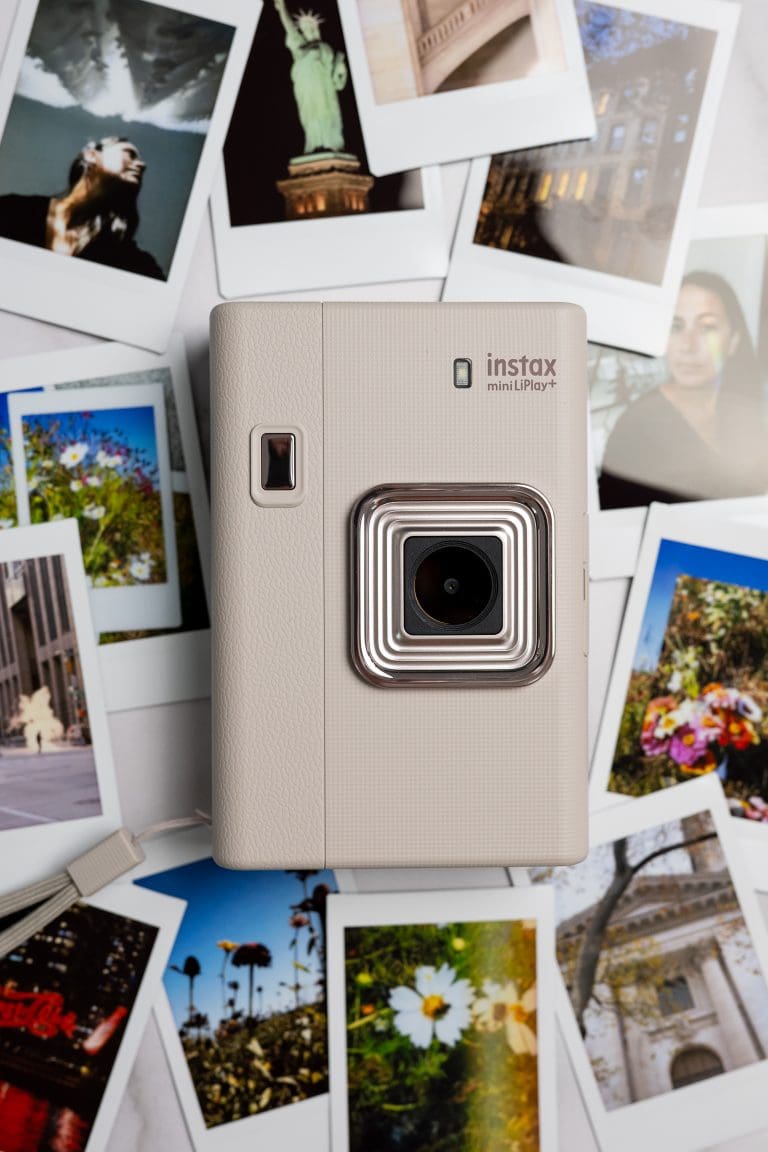
The Instax Mini LiPlay+ is a hybrid instant camera from Fujifilm that can both capture photos digitally *and* print them on Instax Mini film. It can also print photos directly from your smartphone and record short audio clips alongside them. It offers more features and flexibility than a standard instant camera, making it a great pick for more tech-savvy or creative teens. It does have simple controls, so it can be mastered quickly. It has good image quality for sharing on social media, the only one on this list with an LCD screen, and a ton of creative modes.
It has a fun selection of filters, frames, collages, and stickers you can add before printing, which gives it a lot of personality. It is the most expensive camera on this list; however, since you only print the photographs you love, you end up saving money on film in the long run. It’s easy to learn, and the LiPlay+ has a rear screen so you can compose your selfie before you shoot.
It has a rechargeable battery, a microSD card slot for storing your digital photos, and it fits easily in a purse or backpack. It is on the larger side due to the instant film mechanism, but it’s not an awkward shape at all. It’s a great option for a teen who wants creative flexibility but also loves the instant, hold-it-in-your-hands magic of printed photos.
Side note: if you are looking at instant film cameras and want one with a few more features, the Instax Mini Evo is another great camera.

Kodak Snapic A1
The Kodak Snapic A1 camera is a fully analog film camera, and while it is a bit more involved to use (film is an adventure in itself ) , it also produces the most beautiful colors of any camera on this list. It handles low light and shadow detail beautifully and manages highlights and darks in the same frame better than the others. It also shoots double exposures, which gives the photographer so much creative flexibility!
The drawbacks are that you can’t see your photos immediately, film and development costs can add up, and you have to wait until the film is developed to see your results. But honestly? That wait time builds patience, and we could all use a little more of that these days.
The Snapic A1 is incredibly easy to load and automatically rewinds the film when the roll is done. Think of it as a disposable film camera with better image quality and without the environmental impact of actually throwing the camera away. It takes AAA batteries (rechargeable ones are highly recommended) and is small enough to fit in a pocket or wear around your neck. One of the biggest advantages of the Snapic is that since your photos are on film, you can print them at any size — unlike the Instax or Polaroid, which are locked into their specific print sizes.
A few tips for getting the most out of this camera:
1. Know your lighting situation and choose your film accordingly. ISO 200 film works well for bright, sunny days, while ISO 400 or even 800 is better for indoor or lower-light situations. Kodak Gold is a personal favorite.
2. Don’t be afraid of the flash! It’s a great way to make sure your photos are properly exposed; use it liberally.
3. Use a good lab for development, as this makes a huge difference in the final quality of your photos. My local lab in Tampa is Coastal Film Lab, and I also love sending film to The FIND Lab in Utah. FIND Lab will even give you feedback on your photos so you can improve with every roll!

Camp Snap CS Pro
The CampSnap CS Pro is a screen-free digital camera with a fun retro look. It was designed to let kids enjoy taking photos without the instant gratification of a screen, while still combining the convenience and low cost of digital photography. The photos have a film-like quality, and the camera comes with four filters: one black and white and three color film-inspired options.
Beyond the filters, the CS Pro is beautifully simple. The camera displays battery life and how many images are stored on the card, and you transfer photos by connecting a cord to your computer, or to your phone if it has a USB-C port.
The CS Pro is perfect for summer camps, as many camps only allow cameras without screens. In the past, that meant disposable cameras, and those photos were often underexposed, blurry, or had a finger over the lens. This is a much better option.
A couple of things worth noting: the sensor is small, so bright spots in images can sometimes appear overexposed with a pink color cast. This camera has the least dynamic range of any camera on this list. Also, and this seems like a small thing, but it bothered me, the Camp Snap does not come with a strap. You have to find and attach one yourself. At this price point, it should absolutely be included. Finally, outside of switching filters, this camera doesn’t offer much room for additional creativity. It’s great for the teen who wants a unique, low-effort camera that produces fun results without a lot of fuss.
One of the biggest selling points of the CS Pro is that the ongoing costs are essentially zero. Charge it and go! And since the photos are digital, you can print them at any size you’d like.

Polaroid Go Gen 2
Last, and my least favorite, is the Polaroid Go Gen 2. This isn’t a *bad* camera by any means, but Polaroid film can be tricky. When it works, it’s magical. But getting consistent results is tough because the film is genuinely unpredictable.
This is a fully film-based camera with no screen. When you press the shutter button, the photo pops right out. It’s rechargeable, and it comes in some really fun colors. It’s genuinely a joy to use. That said, it is a little awkward to hold and carry (not a camera with a compact design). The Go uses its own special Go film, which is smaller than traditional Polaroid film at 2.6″ x 2.1″. Of course, since every shot prints immediately, there are ongoing film costs, and no way to preview or skip a shot before it prints.
The camera itself is very simple: a flash, a shutter button, and a double exposure mode. That’s really it. Compose your shot, press the button, and hope for the best. Photos develop in about 3-5 minutes.
That unpredictability is actually part of the charm. This camera is perfect for someone who embraces creativity, loves interesting and unexpected photographs, and isn’t afraid to take risks, because the rewards with this camera can be really special.

Image Quality
Image quality is obviously one of the most important factors here. I’ve included comparison images throughout this post, taken in a variety of lighting and color situations to give you the most well-rounded comparison possible. I have my favorites, but you can absolutely decide for yourself!
Instax Mini LiPlay+:
The photo quality is really good. Images are sharp, and Instax prints develop quickly. My biggest challenge was in scenes with a wide range of light and dark; the camera would often underexpose the shadows to compensate for bright areas. You can do some basic editing before printing, but since this camera (like all the cameras on this list) shoots in auto mode, that’s just something you have to work with. I didn’t make any adjustments before printing, as I wanted to show the true straight, out-of-the-camera results.
My biggest tip: use Instax Rich Mode instead of Natural Mode when printing. It gives your photos noticeably more color and depth.
Kodak Snapic A1:
This camera has a glass lens, which gives it better image quality than a typical disposable camera. However, it has a fixed focus; if you want to zoom in or out, you have to move your feet. There is a close-up and a far-away focus option, but nothing will be in sharp focus closer than about three feet. That said, shooting on film means you will get far more beautiful, characterful photographs than any other camera on this list. I’m a big fan of Kodak Gold film; the colors it produces are just stunning. If you are looking for a good starter camera for learning film photography, this is a good option for adults, too.
CampSnap CS Pro:
These photographs are good quality, but without the same character as the film cameras. The camera can sometimes overexpose bright areas and doesn’t handle scenes with both very bright and very dark elements in the same frame particularly well. This is also a great younger kids camera with its auto modes and no screen time.
Polaroid Go Generation 2:
The image quality of the Polaroid Go is honestly hit or miss. However, Polaroid photos can be absolutely beautiful in the right light and circumstances, and chasing those moments is a big part of the fun!
Which Camera is Right for Your Teen or Tween?
The Adventurer/Outdoorsy Kid: This kid just wants to grab a camera and go. Pick them the Camp Snap CS Pro.
The Nostalgic/Artsy Kid: This teen wants to make art, and for them, the fun is in the process. Get them the Polaroid Go Gen 2.
The Social/Creative Kid: This kid wants to take great photos, share them with friends, and add their own creative flair. If that sounds familiar, get them the Instax Mini LiPlay+.
The Analog Kid: This teen loves doing things the original way, and sometimes the hard way, and appreciates waiting for results. Get them the Kodak Snapic A1.
Final Thoughts & Recommendation
In putting this post together, I went through a lot of cameras with teens and tweens in mind, and my goal was to bring you the best of what I found. The Fujifilm Instax Mini LiPlay+ comes out on top for me because of its versatility and style, it’s a great one for creative control. The Kodak Snapic A1 is a close second, because film is just something special, and the colors are truly second to none, it’s an excellent choice for someone wanting to try out film photography. The CampSnap CS Pro comes in third for its ease of use and its sharp photos, and the Polaroid Go Gen 2 rounds out the list, unpredictable, but when it’s good, it’s *really* good.
I’d love to hear your thoughts! Drop any questions you have in the comments below.
FAQ
What age is appropriate for an instant camera?
All of these cameras are great for kids 10 and up.
Is film photography expensive for kids?
Film photography is definitely more expensive than a standard digital camera. However, there are so many valuable life lessons that come with it: learning patience, slowing down, and being intentional with every shot. The photographer quickly learns to think before they click, which makes them a better photographer overall.
What’s the difference between instant and hybrid cameras?
An instant camera, like the Polaroid Go, prints a photo with every click of the shutter — no previewing, no skipping, just shoot and see what you get. A hybrid camera, like the Instax Mini LiPlay+, also captures a photo with each shutter click, but saves it digitally first so you can choose whether or not to print it. Love the shot? Print it. Not feeling it? Move on. It’s a great way to save on film costs.
Can teens use these cameras without a smartphone?
Absolutely, and honestly, that’s part of the point! Each of these cameras is designed to be used on its own, no smartphone required.